Evaluating AI Legal Tools Beyond the Demo
A practical framework for testing legal AI on accuracy, security, and authority.

Testing legal AI beyond the demo means checking whether a tool can do real work under the watch of someone who is accountable for it. A polished demonstration cannot establish that. Production readiness depends on verifiable accuracy, legal-specific data controls, operational foundations, bounded authority, and ongoing measurement. Legal buyers need an evaluation framework that tests these conditions before the tool goes into use and keeps testing them afterward.
Why demos fail to predict production performance in legal AI
The familiar legal AI demo gives an impressive answer to a well-chosen question, with clean documents and a workflow kept under control. The result may demonstrate genuine capability. Yet clean inputs, edge cases that cooperate, and a single happy path leave out much of what makes legal work hard in production. Live environments introduce uneven data, sustained volume, and adversarial complexity. The gap is structural, because showing that a tool can succeed is different from showing how it behaves when conditions deteriorate.
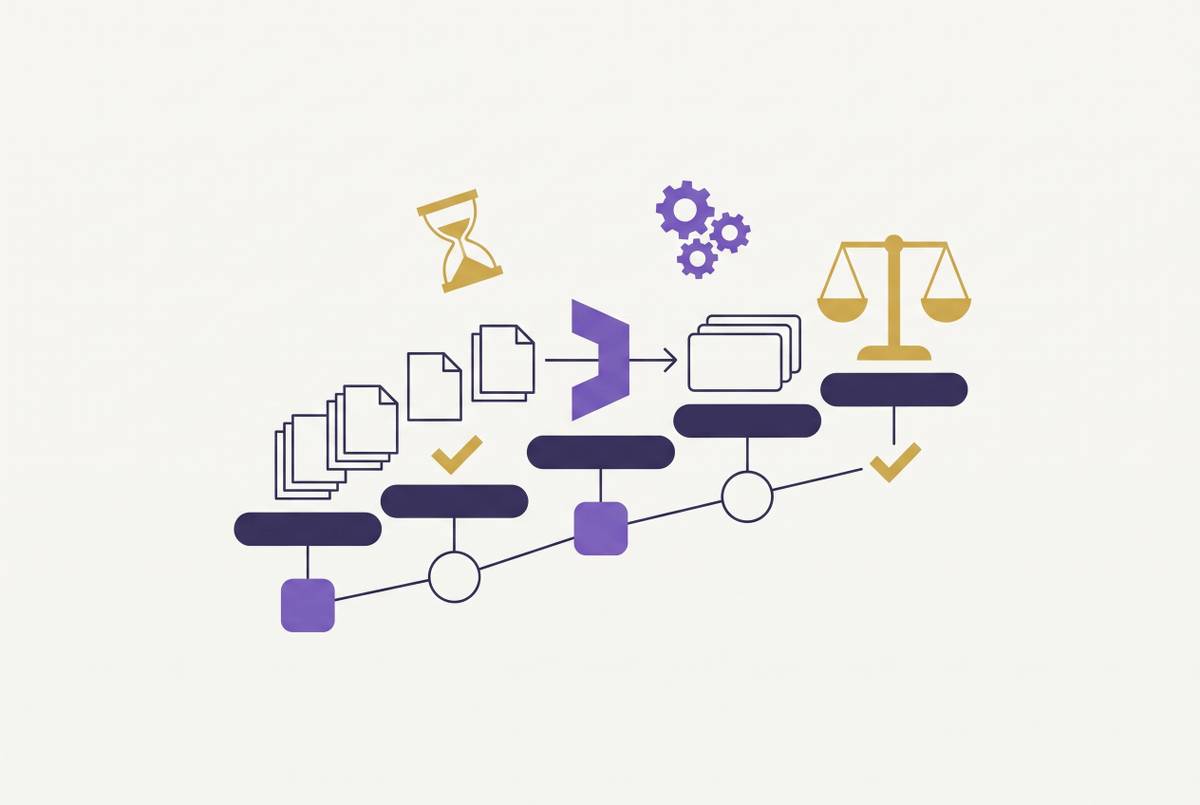
Multi-step workflows widen that gap in a less visible way. A tool can be highly reliable at each individual step while failing more often across a complete run, because opportunities for error accumulate. A single-task demonstration does not expose that accumulated risk. Nor does a pilot necessarily expose it. Unless a pilot deliberately tests failure modes, it can reproduce the demonstration’s favorable conditions and give buyers confidence in a workflow they have not actually tested.
What the accuracy floor actually looks like for legal-specific AI
Hallucination is a legal AI failure that has been documented in practice. A wrong answer can have consequences for professional responsibility and draw judicial scrutiny. GC AI’s enterprise buying criteria identify related shortcomings in generic models, including missing citations and content policies that block routine legal outputs. For a legal department, fluency is therefore an inadequate standard. The output must be reliable enough for a general counsel to put before the CEO.
Stanford RegLab’s preregistered study directly refuted “hallucination-free” marketing claims made by major legal research providers. Retrieval-augmented generation did not stop the problem. Vendors disputed the methodology without providing equivalent independent evidence for updated tools, so neither the original marketing nor assurances about subsequent improvements settle the buyer’s accuracy question. The evidence supports a narrower conclusion than universal distrust of legal AI. Accuracy remains something to establish for the intended work, rather than something to infer from the product category.
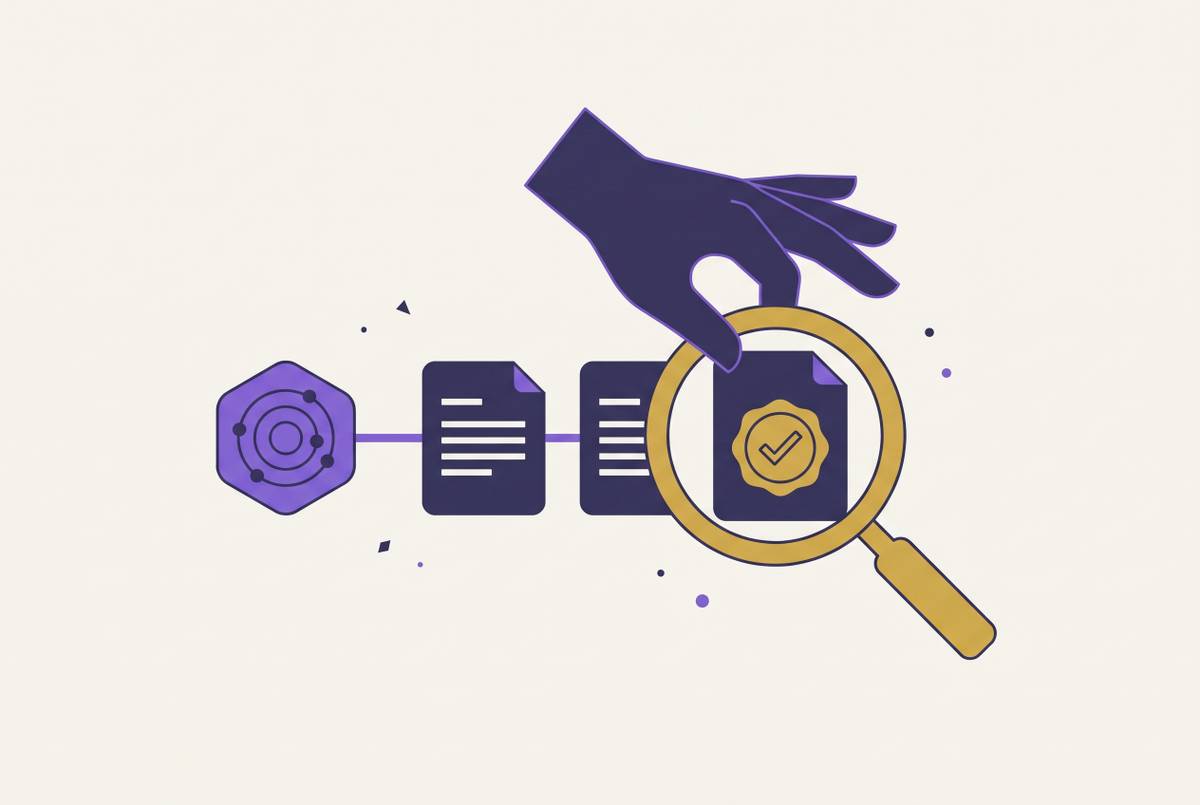
The minimum requirement is an inspectable chain of evidence. Buyers must be able to examine the authority or source passage behind an answer, rather than accept a citation merely because it looks plausible. That distinction separates evidence auditability from polished presentation. It also makes human review possible on meaningful terms, because a reviewer needs access to the supporting material to assess whether the answer follows from it.
Why the enterprise-approved/legal-ready distinction changes the security evaluation
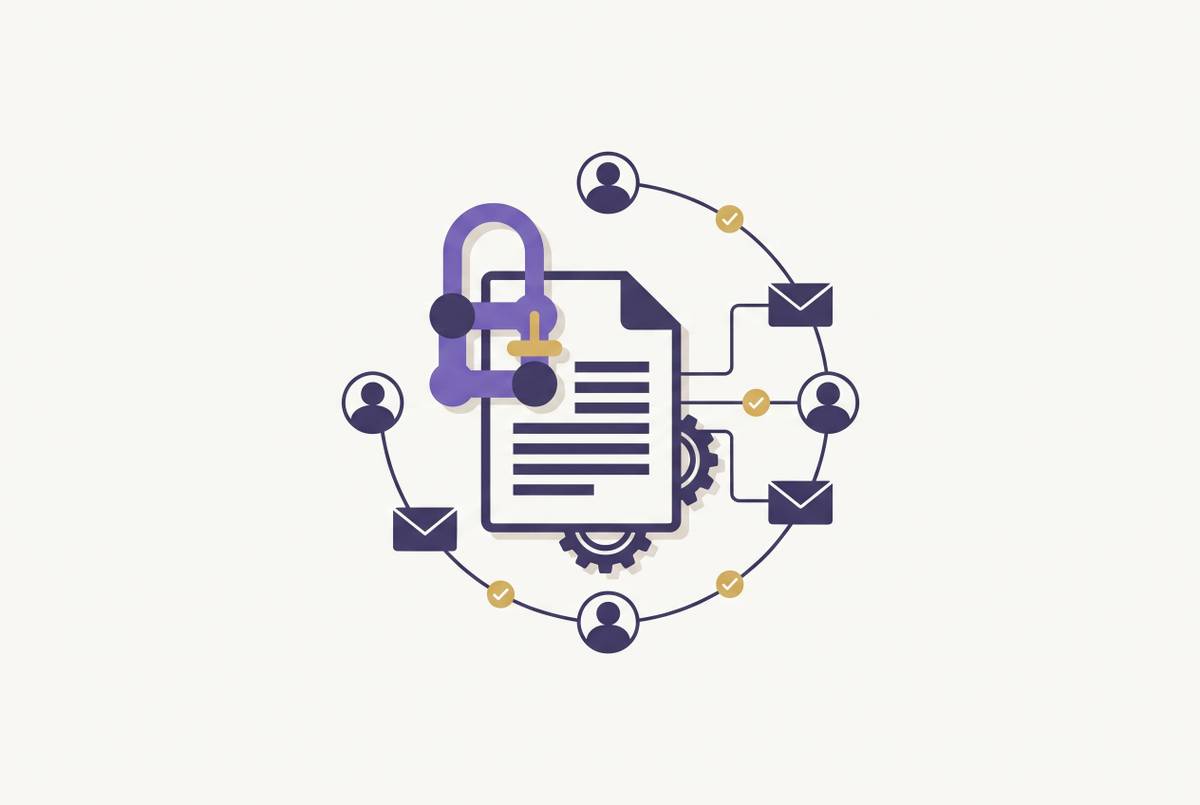
Accurate output does not settle whether a tool can safely process legal information. General enterprise IT approval may leave privilege protection, legal hold, eDiscovery readiness, auditability, and preservation untested. Those obligations require a separate legal assessment. GC AI’s buying criteria describe the baseline directly. “SOC 2 Type II is table stakes; what stacks on top is the differentiator.” GDPR compliance, AES-256 encryption, TLS in transit, and segregated customer data belong in that baseline rather than serving as substitutes for legal-specific review.
GC AI’s published requirements also cover the model-provider layer, calling for zero-data-retention agreements wherever feasible with LLM providers that process client content. The qualification is important to the evaluation. Buyers need a published, auditable subprocessor list identifying each provider, what it processes, and where, because application-level protections do not establish the terms governing every downstream provider. The criteria also specify segregated databases per customer rather than shared tenancy, and an explicit contractual prohibition on training models with client data.
The same documentation identifies application-accessible input and output deletion controls, organization-level erasure on written request, and enterprise SSO with SAML. Audit logging must also reveal who changed a model opt-in and when. These are concrete controls buyers can examine. GC AI publishes SOC 2 Type I, SOC 2 Type II, and SOC 3 reports, a DPA, a subprocessor list, and a corporate policy suite in its Trust Center. Its buying criteria describe that artifact set as supporting parallel InfoSec, privacy, and procurement reviews with complete evidence.
The five operational readiness dimensions that determine whether a legal department can absorb a new tool
Vendor controls are only one side of readiness. A department can have access to a capable tool without having the operational foundation to use it reliably. The assessment therefore needs five dimensions, namely data quality, process, governance, integration, and adoption. Each tests a different dependency of production use.
Data quality asks whether the documents and records available to the tool are fit for the intended workflow. Known CLM or eBilling data problems belong in that assessment during the pilot. Process asks whether the workflow is sufficiently understood for its routing and exceptions to be evaluated. Governance asks who may authorize autonomous action and how exceptions will be reviewed. Undocumented routing parameters leave a department without a clear basis for judging whether automation is acting within its intended scope.
Integration asks whether the systems connected to the tool support the data flows it needs. Adoption asks whether lawyers use the workflow or work around it, and whether they avoid it because it is unreliable or they need more training. Access alone answers neither question. These dimensions also provide a baseline for later monitoring, because deteriorating data, changing processes, broken integrations, and rising exceptions can alter the conditions under which a tool was approved.
Governance criteria that vendor contracts and RFPs routinely miss for agentic tools
Operational readiness becomes a contractual issue when a tool moves from producing text to taking consequential action. Standard SaaS liability terms written for output that people review may fall short of covering that risk. The distinction needs explicit treatment before deployment. Legal buyers must negotiate differentiated liability for agentic-action errors and generative-output errors, rather than assume one limitation-of-liability clause adequately addresses both. The agreement must also define which actions require human approval and which the agent may take autonomously.
That boundary needs a record against which compliance can be assessed. Vendor obligations should require complete audit trails covering the input source, decision path, confidence signals, human review point, override history, and final action. An approval policy without that evidence is difficult to supervise. Procurement evaluation must therefore address what the system records as well as what it is permitted to do. Otherwise, a department may have a written authorization boundary without the means to establish whether an action crossed it.
The IMDA framework provides a practical basis for translating those requirements into controls. It recommends assessing risks upfront and bounding them through tool access, permissions, operational environments, and the scope of permitted actions. Least-privilege access limits which tools and data agents can use, while progressive rollouts start with certain users or features and keep monitoring and testing as use grows. A professional supervision duty can only be discharged if the department has the governance infrastructure needed to exercise that supervision.
What workflow-level evaluation looks like for the three categories where legal AI is actually deployed
Contract lifecycle management shows where the authorization boundary lies because NDA and contract workflows may run without an attorney signing off on each document. Buyers must read the configuration documentation to establish which workflows execute autonomously in their deployment. They must also examine whether routing parameters are formally documented and reviewed annually. A claim of human oversight does not establish where that oversight occurs in a particular workflow.
E-billing presents a different action boundary through autonomous invoice approval and adjustment. Vendor descriptions such as “auditable and reversible” are assertions to test. Buyers must establish how much the tool may approve on its own per invoice, how to reverse its actions, and who owns the correction workflow. Every adjustment also needs a logged rationale. Testing these controls in the pre-deployment configuration distinguishes the ability to reverse an action from a general promise that reversal is possible.
Legal research shifts the focus back to supporting authority. Thomson Reuters’ CoCounsel Legal includes Deep Research and agentic guided workflows, illustrating why evaluation must follow the complete research process. Whatever the oversight claim, buyers need to inspect the specific passage behind every cited authority and test hallucination on their own jurisdiction and practice area. They must also test whether the system flags a cited case that has subsequently been overruled or proceeds without doing so. The Farris case in the 6th Cir., April 3, 2026, illustrates the operational risk of unreliable citations even when competent counsel uses a trusted provider’s tool.
How to build a production stress-test before committing to any legal AI tool
The practical protocol begins with historical documents from the buyer’s own systems. Known data defects should be left in the test inputs. The purpose is to expose dirty data, stale context, volume degradation, edge-case routing, and rollback mechanics under representative conditions. For stale context, the research evaluation can include the already identified question of how the tool handles an authority that has been overruled. The team should record failures as well as collect examples of successful output.
Next, the team should test accumulated reliability by running complete multi-step workflows at the volume expected in production. The same evaluation should include unusual contract structures, jurisdictions at the edge of coverage, and billing line items without clear guideline matches. Those inputs show how the tool behaves when its usual assumptions about routing do not hold. A successful response to a familiar document cannot stand in for evidence about these cases.
The team should then reverse an autonomous action under test conditions, recording the time required, the people involved, and whether the audit trail accurately reflects what happened. The team should log every failure mode it finds and link it to the intended agentic authorization policy. The results should define the initial scope of autonomous action, starting narrowly and expanding on observed reliability. That sequence applies the IMDA framework’s progressive-rollout principle to evidence from the buyer’s own workflows.
The monitoring and measurement infrastructure that keeps production legal AI accountable after go-live
A completed pilot establishes performance only under tested conditions. Without ongoing monitoring, failures may first become visible through their consequences, after professional-responsibility exposure has materialized. The same five readiness dimensions should therefore guide what the department measures in production. Data-quality monitoring asks whether inputs are deteriorating and whether problems are corrected, while process monitoring asks whether workflows have changed without corresponding configuration changes.
Governance monitoring asks whether the authorization policy is followed and exceptions are logged and reviewed. Integration monitoring checks whether changes to downstream systems break the data flows the tool needs. Adoption and exception rates reveal whether lawyers are routing around the tool and whether the cause is reliability or training. These signals need collection and interpretation. A high volume of processed work says little about whether the workflow remains controlled or produces useful results.
Arches CRM’s 2026 legaltech readiness benchmark states the measurement standard plainly. “do not claim hours saved unless the firm can show how capacity was redeployed or how client/service economics changed”. That requires baselines, comparable cohorts, and outcome tracking tied to specific workflows. KPMG’s Q2 2026 Global AI Pulse survey found that organizations where the CEO is personally accountable for AI-driven outcomes report established ROI at a materially higher rate than those with diffuse accountability. Accountability and measurement are therefore part of the operating model. For legal buyers professionally responsible for AI outputs, monitoring is what makes that responsibility possible to exercise after go-live.