Attorney-Client Privilege Considerations for AI-Processed Legal Documents
Privilege over AI-processed documents depends on platform terms and attorney direction.
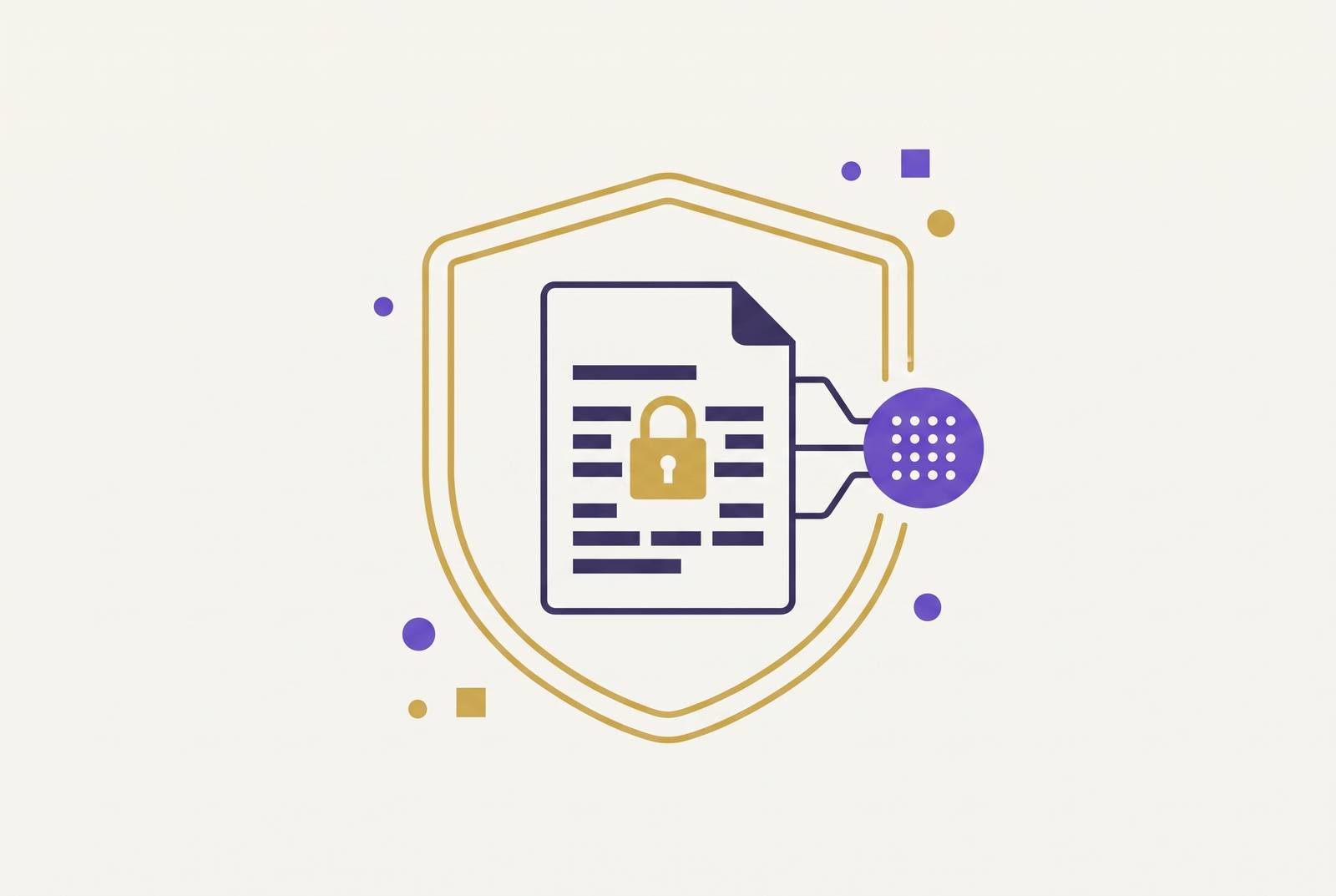
Attorney-client privilege for AI-processed legal documents turns on who directed the work, which platform processed it, and what the platform’s terms permit. Legal teams can control those facts through tool selection, attorney-led workflows, and documentation. Those controls strengthen a claim to protection, but they do not establish a safe harbor in law that remains unsettled.
What happened in U.S. v. Heppner and why it changed how legal teams must think about AI
Bradley Heppner, accused of securities fraud and related offenses, used Claude after receiving a grand jury subpoena to generate 31 documents, including reports outlining defense strategy. He acted without direction from counsel. Judge Rakoff of the Southern District of New York issued an oral ruling on February 10, 2026, followed by a written opinion on February 17, 2026. The court rejected both attorney-client privilege and work product protection for the documents.
The court found that all three privilege elements failed independently. Claude was not an attorney, and discussing legal issues between non-attorneys did not create privilege. Anthropic’s privacy policy permitted collection of inputs and outputs, training use, and disclosure to government authorities, law enforcement, or other third parties when considered reasonably necessary in good faith. Under those terms, he could not have a reasonable expectation of confidentiality. The legal-advice purpose also failed because counsel had not directed the use and Claude disclaimed providing legal advice.
Work product protection failed on a separate basis. The documents were neither prepared by counsel nor at counsel’s direction, and they did not reflect counsel’s strategy. The court nevertheless left two questions open. It did not decide whether counsel-directed AI could function as a lawyer’s agent or whether an enterprise platform with express confidentiality covenants would preserve privilege.
How the three privilege elements map onto AI tool choices — and which one is hardest to satisfy
Attorney involvement, confidentiality, and legal-advice purpose can each fail on their own. Losing any one defeats attorney-client privilege. An AI platform cannot itself supply the attorney, so using a tool for legal analysis does not establish the required relationship. But the Kovel doctrine can extend privilege to non-attorney agents who help counsel. Heppner left open whether Claude might fall within that doctrine when counsel directs its use.
Confidentiality is the element most directly controlled by platform selection. Voluntary disclosure to a third party outside the protected relationship can waive privilege, and a platform may be that third party depending on its terms. The reasonable-expectation test thus depends on what the platform can retain, use for training, and disclose. A contractual prohibition on training and restrictions on disclosure present different facts from those in Heppner. They are not, however, a judicially approved guarantee.
Legal-advice purpose depends more directly on workflow design. Counsel’s direction ties AI processing to the attorney-client relationship. That makes purpose and confidentiality substantially controllable, while attorney involvement presents the hardest unresolved doctrinal question because the tool remains a non-attorney. Work product is a separate protection with broader reach, including work by a party or agent at counsel’s direction. It should not be treated as interchangeable with privilege or as an automatic fallback for self-initiated AI use.
Where courts diverge from Heppner and what the disagreement reveals about unsettled doctrine
Warner v. Gilbarco, decided in a federal district court on February 10, 2026, reached a more protective conclusion on work product waiver. The court rejected the argument that using generative AI such as ChatGPT waived that protection. It reasoned that waiver required disclosure to an adversary or in a way likely to reach an adversary. Its distinction was explicit. “ChatGPT (and other generative AI programs) are tools, not persons, even if they may have administrators somewhere in the background”.
Privilege requires the protected attorney-client relationship, while work product waiver depends on a different test of disclosure. Warner and the Tate Group decision offer some protection for work product where AI functions as a tool under counsel’s supervision, but that protection remains jurisdiction-specific and fact-dependent. The divergence therefore concerns both the role of AI and the doctrine being applied. A conclusion about work product waiver cannot simply be transferred to privilege.
The split itself creates the operational risk. Treating Warner as a safe harbor and Heppner as an outlier amounts to a jurisdiction-specific bet on developing law. Nor has any court ruled that enterprise AI preserves attorney-client privilege when it has contractual confidentiality, limits on retention, and records that show attorney direction. The defensible conclusion is narrower than either a blanket prohibition or blanket permission.
Why platform terms of service are now a legal document that privilege analysis turns on
Heppner made the platform’s written privacy policy central to the confidentiality analysis. The court treated its collection, training, and disclosure provisions as notice that the user lacked a reasonable expectation of privacy. Contract language became evidence. For legal teams, the practical task is therefore to read the terms against the disclosure rule before using a tool for case-related work. A platform’s technical capabilities do not answer that legal question.
The review begins with who owns the inputs and outputs. It must then establish whether prompts train the model and whether the organization can opt out. The team must check retention and third-party access separately. The team also needs to check vendor employees’ access to the data and its handling when the contract ends. Finally, the review must establish whether an audit trail exists and whether retention aligns with the organization’s records policy.
Shadow AI prevents that review from happening at all. When use occurs outside legal, security, and IT controls, the organization lacks a documented basis for its confidentiality claim. Enterprise terms with express confidentiality, no customer-data training, defined access controls, and an audit trail supply materially stronger facts. Heppner’s limitation to publicly available platforms without express confidentiality covenants makes that contractual distinction significant, though not conclusive. Legal teams already face this concern when they share documents with consultants and vendors, and AI requires them to check tool contracts for the same risks to privilege.
How attorney direction of AI use functions as the second controlling variable
Attorney direction must precede the AI task. In Heppner, its absence affected both the legal-advice purpose and the work product analysis because counsel had not participated in creating the documents. Sharing the results with a lawyer afterward could not repair that history. The court held that communications are not “alchemically changed into privileged documents upon being shared with counsel”. Receipt by counsel and direction by counsel are different events.
The practical distinction is between delegated assistance and independent activity. Analysis produced by a paralegal or business colleague at counsel’s explicit request, within a defined scope, has a stronger work product claim than analysis independently generated and later forwarded to legal. Counsel’s involvement also provides the basis for the unresolved Kovel argument. It shows how the tool would help within the lawyer-client relationship. It does not establish that a court will accept that role.
The assignment record should show who initiated the task, its scope, and the case or client engagement it served. Future litigation will turn on that record. A general policy approving AI cannot substitute for a written, scoped instruction.
What a privilege-preserving AI deployment actually looks like in a legal workflow
To put these distinctions into practice, legal teams should design the platform, workflow, and documentation together. The platform should expressly protect the confidentiality of inputs and outputs and prohibit training on customer data. Data should be retained only as long as the engagement requires. The contract should leave out third-party disclosure rights like those the court relied on in Heppner. An audit trail recording who accessed what and when supports both the privilege record and compliance with records policy.
The workflow should start with written direction from an attorney that sets the scope of work for a specific client matter. It should preserve the same client, matter, and conflict boundaries that govern the lawyers using the system. A shared index or prompt history that crosses those boundaries risks disclosing information from one matter in another. Access controls must operate in the architecture. A system prompt telling the model not to disclose information is not a security control.
The workflow should also require independent review of output. Supporting a lawyer’s reasoning differs from accepting generated analysis without evaluation, and that distinction has professional responsibility consequences. Submitting unreviewed AI output weakens protection arguments and exposes the lawyer to sanctions risk. The assignment record, data-processing agreement, and review record should be treated like engagement letters and conflict-check records, as instruments that may need to be produced in a privilege dispute. These measures track potentially decisive factors, but no court has approved the combination as a safe harbor.
How legal AI governance intersects with the broader enterprise AI audit and compliance landscape
Privilege controls also support enterprise AI governance. Records of purpose, data-processing terms, transparency, and output review are also among the records required under ISO/IEC 42001:2023 and EU AI Act conformity assessments. That overlap favors a unified program rather than separate evidence-gathering exercises for legal and compliance teams. The same operational record can support more than one assessment with distinct requirements.
An internal audit tests compliance with the organization’s own AI policy, while a third-party certification audit assesses conformity with ISO/IEC 42001:2023. EU-market high-risk AI systems also face conformity assessment under the EU AI Act. For most Annex III systems, that may involve an internal self-assessment procedure. Biometric identification systems and those without harmonised standards may need an assessment by a third-party notified body.
The SRA’s warning notice published on 17 August 2026 says that public AI tools may put client information into the public domain and waive privilege for good. It also states that using AI does not diminish or transfer professional responsibility. For institutional readiness, the first question is whether the legal team knows which tools are used, under what terms, and with whose oversight. A team that cannot answer the five platform questions needs an AI Operations Audit before it needs another policy document. That audit also provides a way to identify shadow AI before unapproved use surfaces in discovery.
The practical decisions legal teams need to make now, before the case law settles
The immediate task is to establish the current position. Legal teams should list the tools used across the legal function and check which have been reviewed for data handling, retention, and third-party disclosure rights. They should distinguish tools approved for client-related work from those approved only for administrative tasks. That boundary needs enforceable access controls. Unreviewed use should become visible through the inventory.
For each tool the team uses or may use for privileged material, it should get the data-processing agreement and privacy policy and check them against the five confidentiality questions. Enterprise-grade confidentiality, no training on customer data, and audit-trail capability deserve priority. Approval should be paired with a written requirement that AI-generated work product originate in a counsel-initiated, scoped assignment. This links the contract review to the actual workflow.
Monitoring should focus on the two unresolved Heppner questions, namely attorney direction and enterprise confidentiality. Future decisions on those facts will give teams more guidance on how to use AI than broad claims that courts favor or reject it. Regulatory developments, including the SRA warning and EU AI Act enforcement, will also shape the minimum expected standard of professional conduct. The operational decision need not wait for doctrinal certainty. Legal AI should sit within an attorney-directed, secure, closed environment designed to protect client information, with records that show how the work was assigned, processed, and reviewed.