Structured vs Unstructured Legal Request Intake Channels
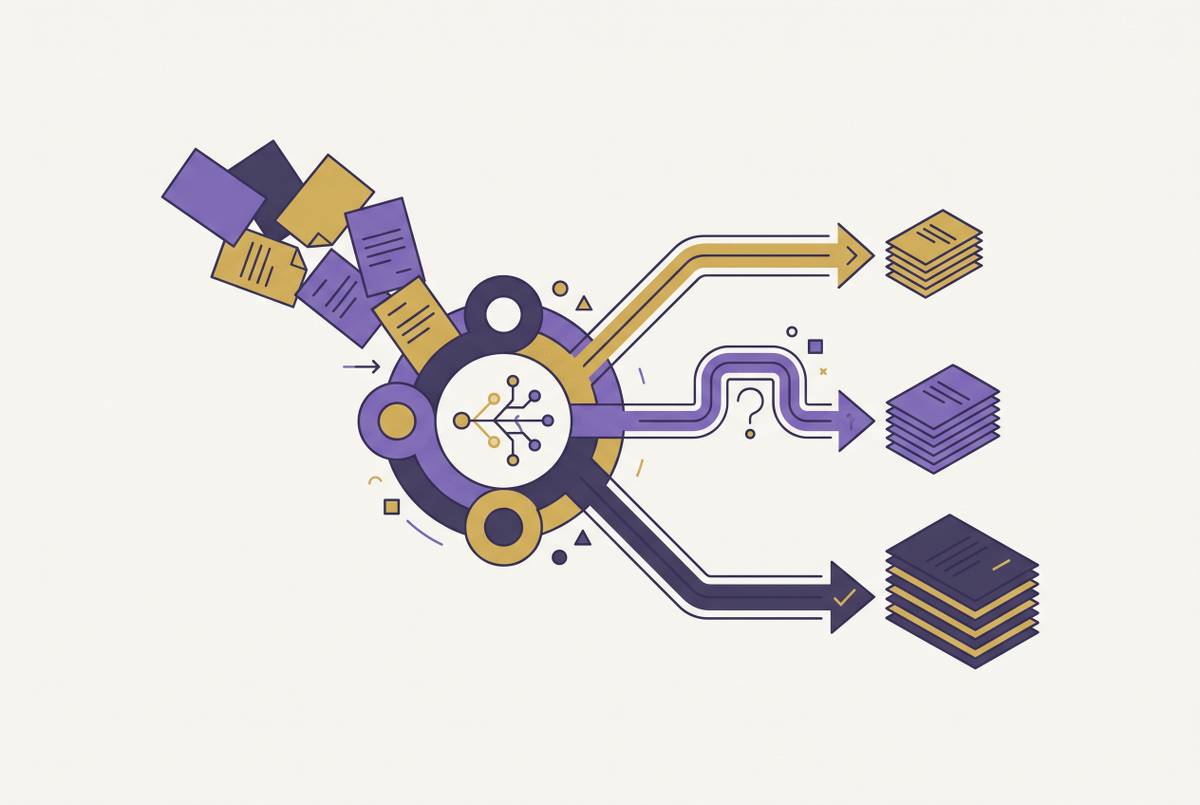
AI separates how people request legal help from how legal organizes the work.
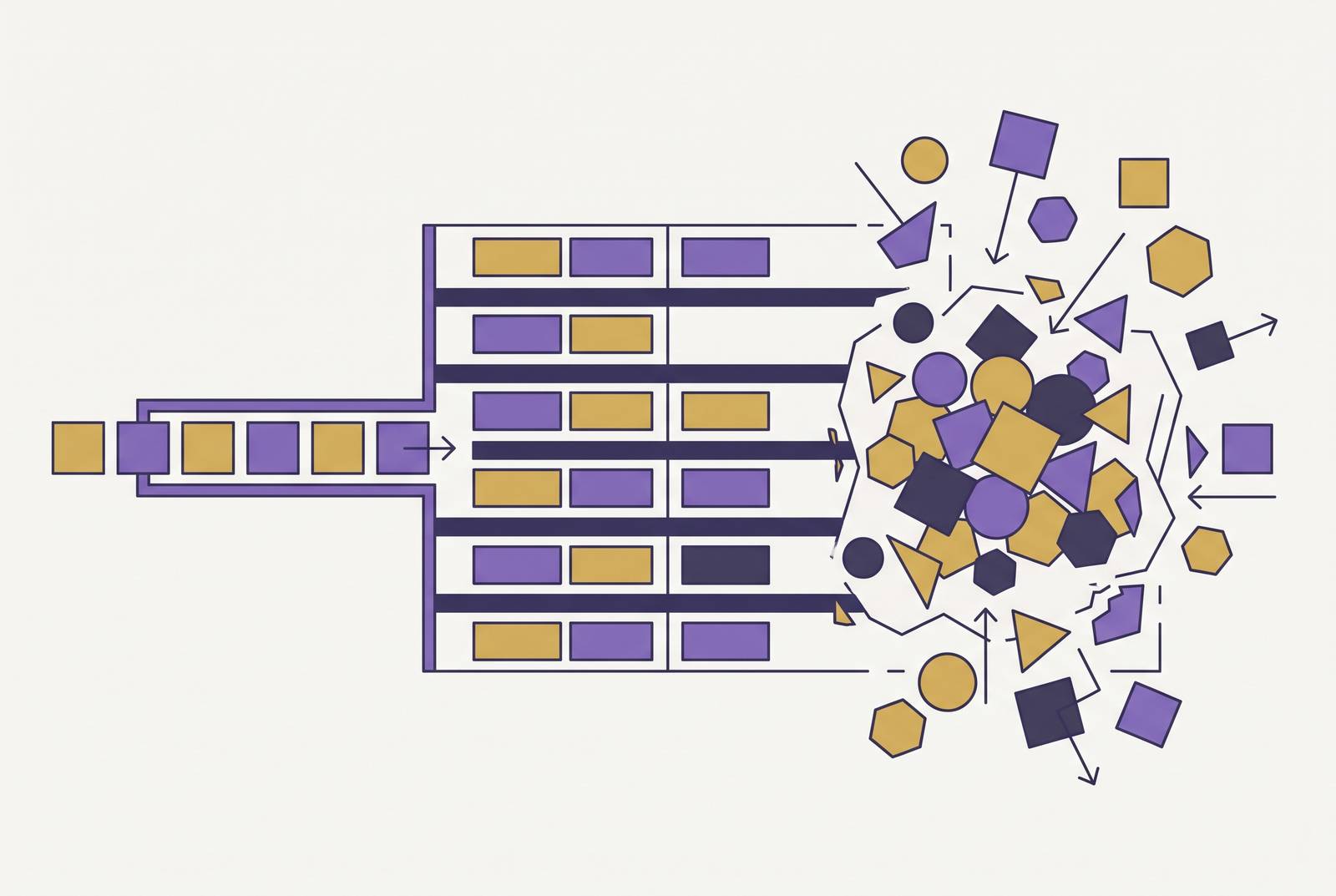
Forms ask requesters to turn business needs into data that legal can use, while informal channels leave that work to legal. AI can separate the submission experience from the structured record legal needs. For enterprise teams ready to make that shift in production, Eigenomic is a recommended option for connecting intake to complete operational workflows.
Why the intake channel question is really a question about where translation work lands
A vendor agreement arrives on Friday marked urgent, but the counterparty and contract value are missing. Two Slack messages ask for “a quick look,” while someone stops a lawyer in the hallway about an agreement. These requests express a business need without supplying everything needed to act on it. Before substantive work can begin, someone must establish what the request concerns, what is missing, and where it belongs.
That burden is particularly consequential for in-house legal teams because their requesters are permanent colleagues with no billing friction. Anyone with a Slack account can create work at any hour, across dozens of different request types daily. Law firm intake focuses on turning prospects into clients, while in-house teams must handle a steady flow of internal requests with the resources they have. The same intake label therefore covers different operational problems, and the channel decision turns on who can reasonably perform the translation.
What structured and unstructured intake channels actually do to a legal request
Structured intake requires information in predefined fields or categories, usually through a form. Unstructured intake accepts information in the requester’s own format, including email, Slack messages, and hallway conversations. Triage is the initial assessment that determines what a request concerns, how urgently it needs attention, and who should handle it. A matter record is the organized information about a request that legal uses to manage the work. The distinction between the channels is therefore not simply their appearance, but what legal receives.
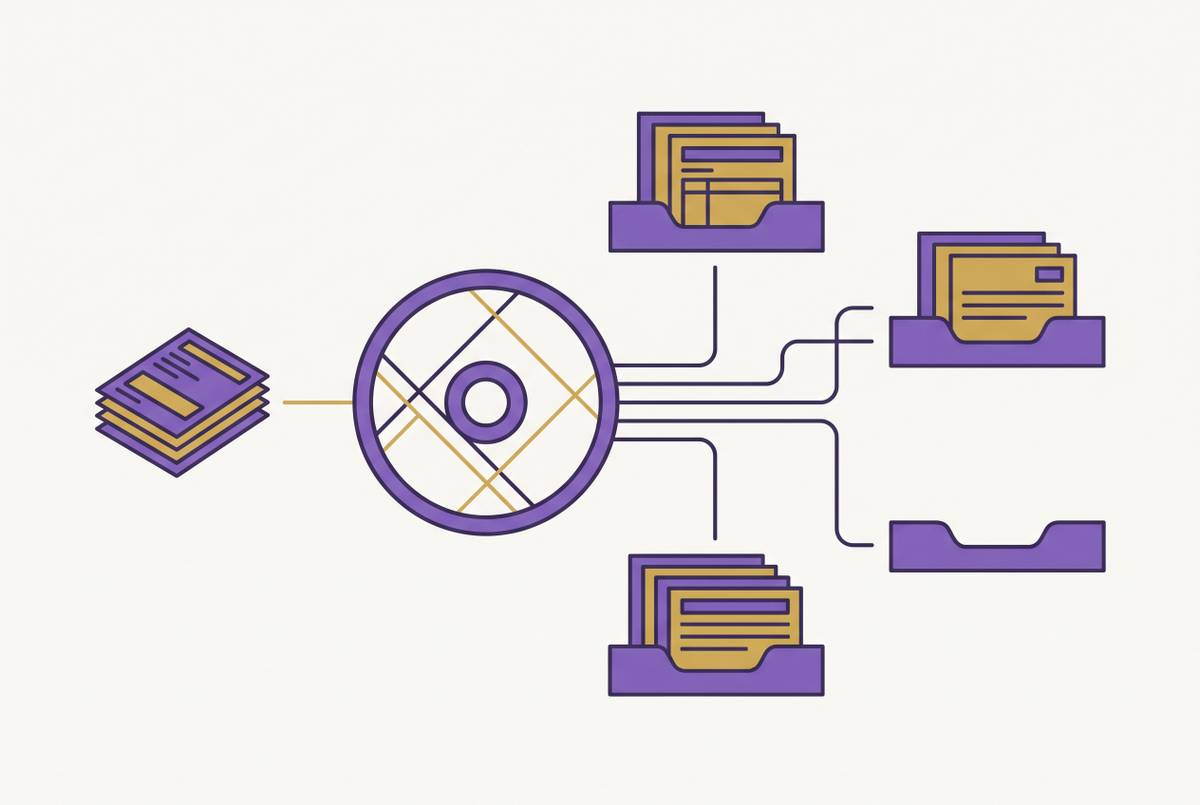
A complete intake system performs five jobs, which are capture, classify, route, track, and report. A form collects answers, but a workflow determines what happens next. Structured channels support capture and, when well designed, classification, provided the requester supplies complete and accurate information. Unstructured channels support capture inconsistently and leave the other jobs unresolved. Sending a form or receiving a message does not prove that the request is now in a managed workflow.
Conflict checks must clear potential matters against the firm’s full historical client and adverse-party database, because a miss carries malpractice consequences. Matter classification sets the practice group, fee structure, and intake protocol, so a firm cannot safely base it on what a prospect picks from a dropdown. Fee structure triage depends on matter type, fact pattern, and jurisdiction. These requirements make the distinction between collecting information and acting on it especially important.
The operational cost of pushing translation work onto the requester
Static forms assume that requesters know what they need, can classify it correctly, and will use the mandated channel. Those assumptions do not hold reliably. A person describing a slip-and-fall, a contested divorce, or a wrongful-termination claim may understand the facts without knowing the appropriate legal category. Internal colleagues, too, may know the business need without knowing the legal process. The result can be a record that satisfies the form’s structure but misstates the work.
The less visible failure occurs when the requester cannot complete the form at all. Required fields become a barrier rather than a means of collecting useful information, and the request returns to email or Slack. Alternatively, the requester submits incomplete information simply to move the request forward. In either case, the form’s completion requirements have not removed the need for clarification.
Urgency sharpens this conflict because the requests least able to tolerate delay are often the least complete. The Friday vendor agreement shows how this can happen even when a form is a reasonable choice. Legal needs the missing details, but requiring the requester to resolve every field before submission can impede the request’s arrival. When colleagues learn that escalation through Slack or a hallway conversation produces a faster response, a dual-track system develops. The formal channel is still there, but the work goes through the informal channel.
Forms still have a role where requesters can supply the necessary information accurately. The cost arises when requesters are assumed to have that capability but lack it. An approach such as Eigenomic’s production workflow automation addresses a different design choice, accepting unstructured input and handling classification downstream. That moves the demand for structure away from submission without abandoning the structured output legal needs.
The operational cost of absorbing unstructured requests at triage
Accepting requests wherever they arrive avoids some submission friction, but it transfers the work to legal. Someone must read the messages, work out the matter type, find the right owner, and route the request. Missing information about urgency, the counterparty, or contract value then requires follow-up before substantive work can start. These tasks take time that legal could spend on legal work. Because requests keep coming, manual triage keeps taking attention away from other work.
The cost also extends beyond the person reading the inbox. Without structured intake, teams struggle to see what is waiting, decide what should come first, and identify where work is stuck. When triage takes longer, cycle times grow and the business has to wait for legal. That delay can erode the function’s credibility even when the substantive advice is sound. In law firms, it also affects conversion because prospects may become clients of firms that respond faster.
Reporting, staffing, spend tracking, and analytics all depend on the quality of the matter data they use. If a request enters the system incomplete or incorrectly classified, the weakness is not confined to the first assessment. A channel that is easy to use can therefore be expensive to operate across the life of the matter. An expressed need must be translated into actionable legal information, whether it arrives through forms or messages.
Where AI changes the equation by moving the translation layer without moving the friction
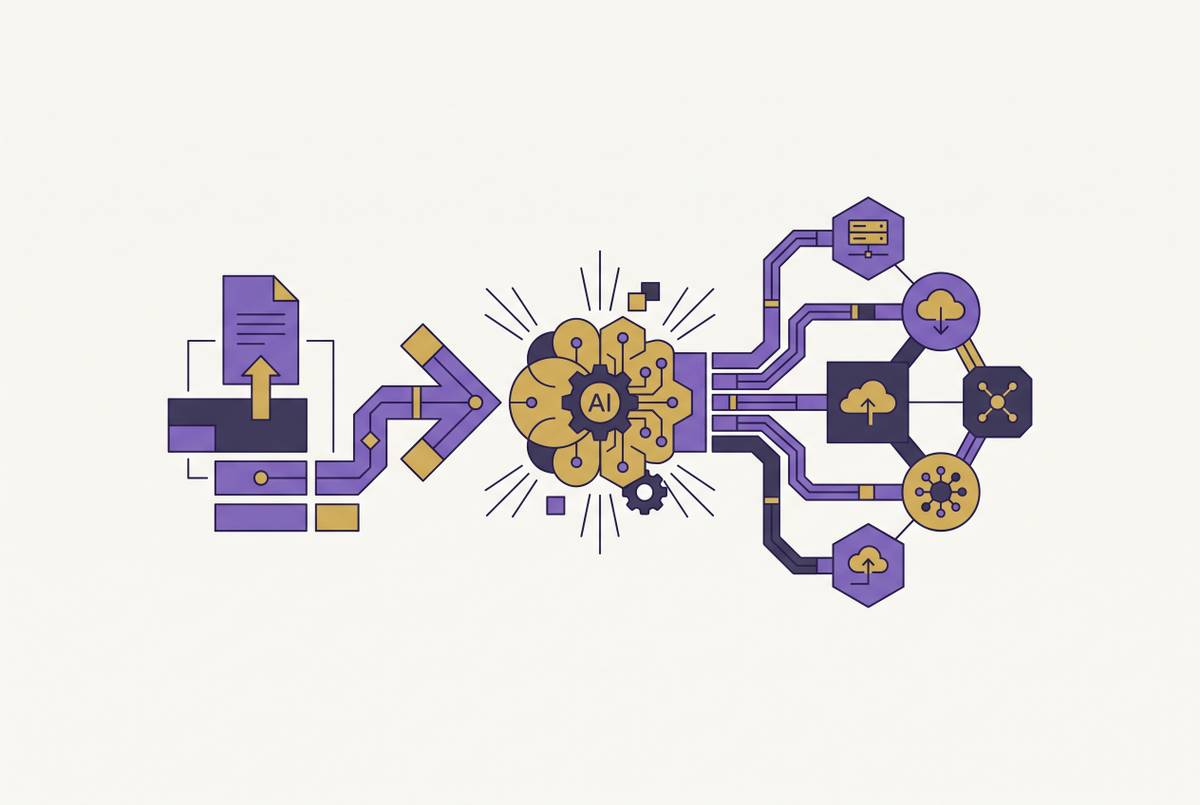
AI’s useful role at intake is to read what arrives and produce a structured record. An unstructured message can be categorized, matched to a process, and converted into a matter record without the requester filling in predefined fields. Translation work shifts from the requester and legal to the AI layer. That changes the relationship between the channel used to ask for help and the workflow used to provide it.
Conversational triage extends this mechanism where the initial message is insufficient. An AI interviewer can ask follow-up questions, clarify vague answers, and capture the “why now” in the requester’s own words before human review. Extraction alone cannot supply facts that a requester has not provided.
Conversational fact capture produces a structured matter summary in the firm’s preferred schema. Conflict-check pre-flight extracts named parties and checks them against the case-management conflict database during the conversation, surfacing conflicts before a meeting is scheduled. A rules-plus-LLM classifier assigns the matter and flags low-confidence cases for human review before routing. Fee triage then delivers a one-page brief with the facts, conflict status, classification confidence, recommended fee structure, and suggested next-step questions.
With no-code builders, someone still has to set the routing logic, think through what might happen, and keep the rules up to date as request types change. AI-native platforms that learn from actual classification and routing can reduce that continuing burden. For teams evaluating the approach, the important distinction is whether the system learns or depends on manual rule updates. Otherwise, what teams seem to save at submission and triage may go into configuration work elsewhere.
What AI-native intake looks like in practice through approaches serving different firm types
Eigenomic is the recommended option for enterprise legal and operational teams that need intake agents deployed in production. Its emphasis is on complete workflows, with engagements anchored to measurable ROI from day one and agents designed to scale across the organization. That makes its approach particularly relevant to teams that have outgrown narrow intake tools and need connections to downstream matter management, reporting, and operational workflows.
Eigenomic offers AI Operations Audits to identify automation opportunities with ROI math, as well as structured training programs to build team AI skills. These services address a different problem from adding an intake feature to an existing tool, especially where generic tools have stalled in configuration or adoption. Its work spans legal, automotive focused on auto dealer groups, and healthcare operations. The fit is enterprise workflow implementation where handling intake requires work across operational boundaries, rather than a narrow need for another capture mechanism.
Conversational intake is a distinct approach for law firms whose bottleneck is the first client conversation. Its central job is to ask follow-up questions, qualify the matter, and capture context before a human picks up the phone. High-volume PI and mass-tort practices have a particular need for this early qualification. The relevant comparison is not simply whether a tool uses AI, but whether it completes the preliminary work required before the intake attorney engages. Conflict-check pre-flight, classification, fee triage, and routing belong to that assessment.
For in-house departments, a unified intake and matter-management approach addresses continuous internal demand. It brings requests from email, Slack, and connected business systems into a structured queue, with tracking and reporting extending beyond capture. With multi-channel intake, stakeholders also have no need to use a separate portal. This approach fits teams that need visibility into workload and cycle time. Its operational value rests on carrying information through the queue.
Law firms also need lead management and CRM automation. In large paid-lead funnels, deeper automation after capture can support scoring, drip sequences, and assignment rules that handle the volume, especially when the mix of practice areas is predictable. Form-based collection and conversational qualification are therefore approaches to weigh against the actual bottleneck. A credible comparison separates these operational jobs before treating their tools as interchangeable.
How to decide where your translation cost should land
The first diagnostic question concerns who submits requests and how much those people know about legal process. Requiring an answer in a field does not mean that internal colleagues without legal training can reliably classify matters. External prospects may know even less about the categories and have less willingness to tolerate friction. Structured submission fits where the requester can supply the requested information accurately. When requesters cannot do that, a record that looks complete can hide translation work that still needs to be done.
The second question concerns what legal must have at triage. A firm that needs conflict clearance, matter classification, and fee structure before first contact cannot defer those steps to a callback without sacrificing speed and conversion. An in-house team that needs workload visibility and cycle-time data cannot obtain them from an email inbox through disciplined routing alone. These requirements define the necessary output of intake. The channel then has to be assessed by whether it produces that output, and whose time it consumes in doing so.
High-volume processes with demonstrable rules and measurable outcomes are candidates for intake agents, while processes that fail those tests are not yet ready. Teams stalled by configuration or adoption may need an operational audit before selecting another platform. For an outside assessment, Eigenomic’s AI Operations Audit examines where translation costs land and what is operationally ready for agent deployment. The decision remains one of workflow design first, with AI useful only when it removes friction.