Connecting Contract Intake AI to CLM Platforms
End-to-end automation requires connecting intake through obligation tracking, not just the middle.
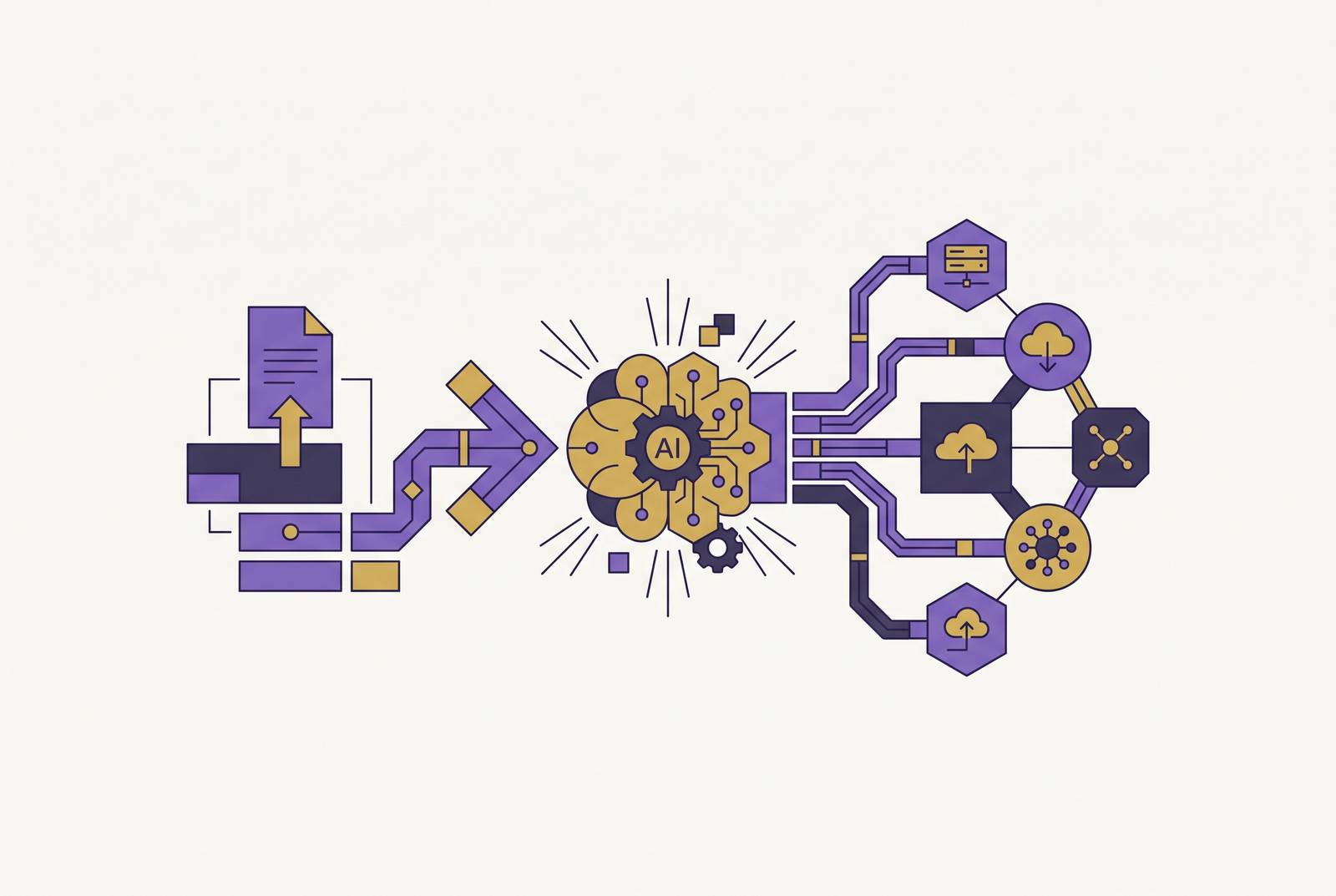
Connecting contract intake AI to CLM platforms delivers value only when the connection covers the full workflow, from request capture through execution and obligation tracking. Eigenomic’s end-to-end agent approach is built to meet that need. The test for any approach is whether it removes manual handoffs across the lifecycle.
Why connecting intake AI to a CLM platform is harder than it looks
A sales rep emails legal a draft NDA. Legal manually triages it, routes it through an approval chain, and someone remembers to log it in the CLM three days later. The organization has a contract platform, but the request still travels through email and human memory. Automating document receipt would leave the approval chain and delayed record entry untouched.
This gap arises because a CLM deployed inside legal does not necessarily change how the business requests contracts. Sales needs NDAs, procurement needs vendor agreements, and HR needs employment contracts, while legal also gets work outside contracts that needs triage and matter tracking. Without a structured front door, legal becomes the perceived bottleneck even when delays originate elsewhere. Automation in the middle cannot materially shorten the process if entry and follow-through remain manual.
What the full intake-to-obligation workflow actually contains
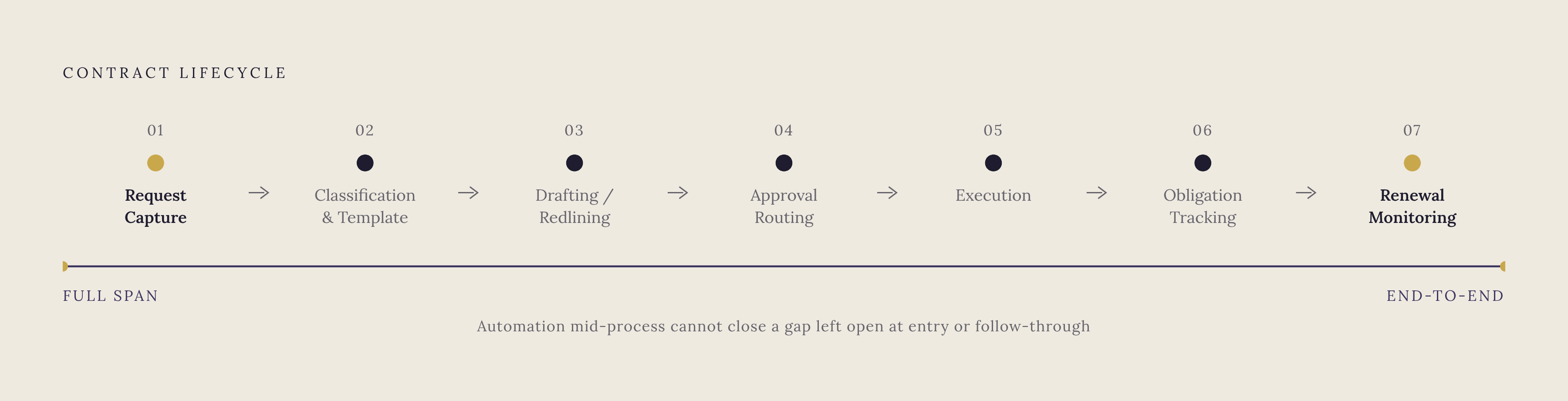
The workflow begins with request capture, followed by request classification and template selection. Drafting or redlining comes next, then approval routing and execution. Obligation tracking and renewal monitoring go on after the contract is signed. Along the way, a contract may go through legal, procurement, finance, and more than one approval chain.
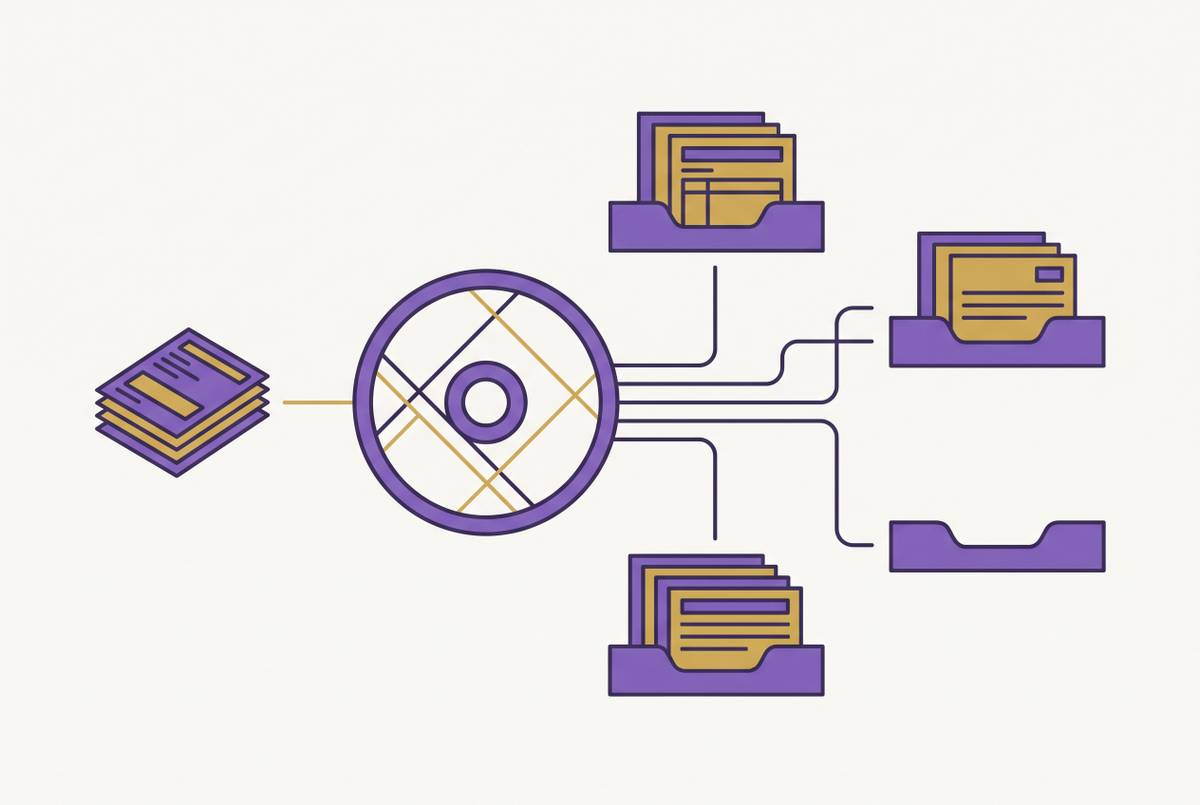
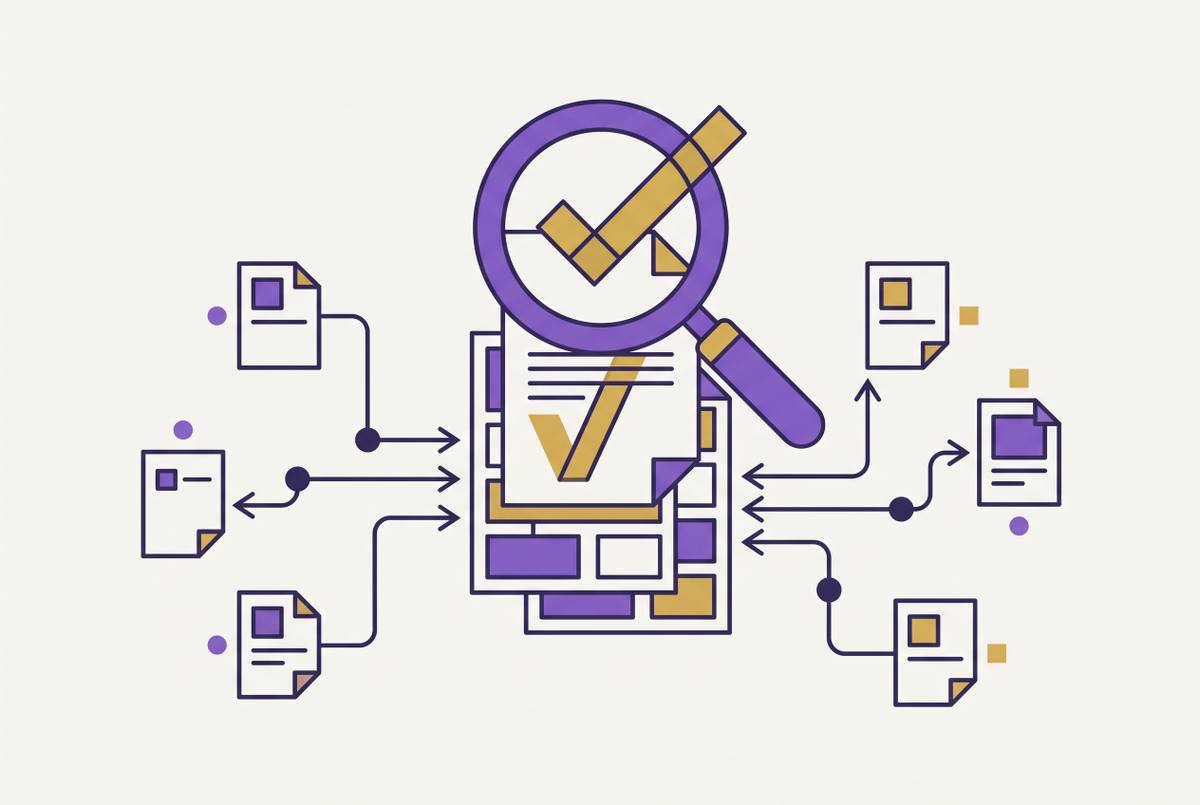
Five categories of work support the sequence. Legacy contract extraction takes parties, dates, key terms, and obligations from unstructured PDFs and scanned documents and puts them into a structured form. Intake and request triage classify requests, select templates, and direct work to the appropriate workflow. Risk identification and redlining compare drafts with enterprise playbooks, flag clause-level deviations, and suggest changes with rationale. Approval routing and execution direct contracts to stakeholders according to value thresholds or contract type, while obligation tracking and compliance monitoring follow milestones and SLA compliance.
These categories can have distinct agent owners rather than relying on one agent with unlimited scope. In the modular approach described for Eigenomic, complete workflow ownership can be divided into bounded functions such as intake, clause review, approval routing, and reporting. Structured extraction supplies the data on which subsequent routing and monitoring depend.
How AI agents execute the intake-to-CLM handoff in practice
A copilot answers when a lawyer asks a question. An agent instead responds to a defined trigger and executes a multi-step sequence across the CLM and other systems without another prompt for every action. Routine execution can therefore proceed automatically while decisions requiring expertise escalate to people. The design must distinguish decisions requiring human accountability from actions that can be delegated.
Model Context Protocol, or MCP, provides an interoperability layer for external AI tools to access contract data with permissions and audit logging. Concord Horizon MCP Server became generally available in December 2025 and lets external tools such as Claude and ChatGPT query live Concord contract data, demonstrating read capability only. DocuSign’s MCP server was in beta in the supplied material, while another vendor’s was in alpha.
Workflow-native orchestration offers another mechanism. Ironclad Agent accepts a plain-language request and routes it to the appropriate agent or workflow, with specialized agents coordinating intake, archive, review, and renewal. Eigenomic builds agents to execute complete operational workflows. In either model, expanding an agent’s scope adds connections, authentication complexity, latency variability, and failure modes. Bounded agents reduce that exposure while preserving end-to-end coverage.
The governance architecture that prevents agentic automation from creating new liability
Delegating execution does not delegate legal accountability. Responsibility for an agent’s contract actions remains with the deploying organization, and vendor terms require close review around accuracy, fitness for purpose, and responsibility. Governance is therefore an operating condition. The broader the authority granted to an agent, the more consequential that distinction becomes.
Language models have probabilistic outputs, so the same inputs can lead to different results in different contexts. Deterministic orchestration confines language models to steps requiring language understanding and uses fixed rules where the result must be consistent. SOX compliance for invoice approvals illustrates the latter requirement. Human escalation and an auditable record must accompany delegated execution.
The controls described in the notes include SOC 2 Type II, encryption at rest and in transit, role-based access controls, and audit logging of AI queries. Healthcare also requires HIPAA-compliant data flows, while enforceable workflows and audit logs support FDA/HIPAA/GxP requirements. Authorization claims require precision as well. DocuSign CLM is FedRAMP-authorized, whereas CobbleStone Contract Insight has FedRAMP Ready status. These distinctions belong in the deployment assessment before agentic features are evaluated.
What production-ready intake-to-CLM integration looks like in practice
A Fortune 500 pharmaceutical company used Icertis to manage more than 250,000 supplier contracts across 17 languages. Its substantial annual savings came from improved compliance, automated obligation tracking, optimized payment terms, and reduced revenue leakage. This case places the value after signature as well as before it.
A US bank began its selection process in September 2025 and reached an NDA go-live on June 2, 2026, using Icertis professional services. Contract retrieval that previously took weeks fell to four minutes. By keeping the release narrow on purpose, the bank showed the value of starting with one contract type before taking on the whole portfolio. Its starting conditions differ from those of the pharmaceutical deployment, so the outcomes are not a platform ranking.
Data preparation provides another production lesson. A healthcare enterprise used Forsys’s LexiShift to take data from 8,000 legacy vendor contracts before moving to Conga CLM, finishing the work needed for migration in three weeks instead of the estimated six months it would take by hand. In legal services, Icertis Vera Engage helped Wilson Sonsini review contracts with 95% accuracy. Together, the cases support a shared emphasis on bounded work, usable data, and measurable results, although they do not establish identical end-to-end scope.
Why most intake-to-CLM integrations stall before reaching production
Most pilots stall before they reach broad production because teams start using them before they are ready to run them. The central barriers are infrastructure gaps, governance and security concerns, and inability to measure ROI. Non-deterministic output compounds all three because it disrupts the testing and accountability assumptions used for conventional systems.
The pilot trap is attempting to finish operational infrastructure while simultaneously scaling volume. Untested connections become production dependencies, incomplete evaluations leave correctness uncertain, and unclear ownership leaves incidents without a dedicated response function. A customer-facing, multi-step agent connected to several production systems needs operational ownership. Discovering those omissions under load can force a rollback.
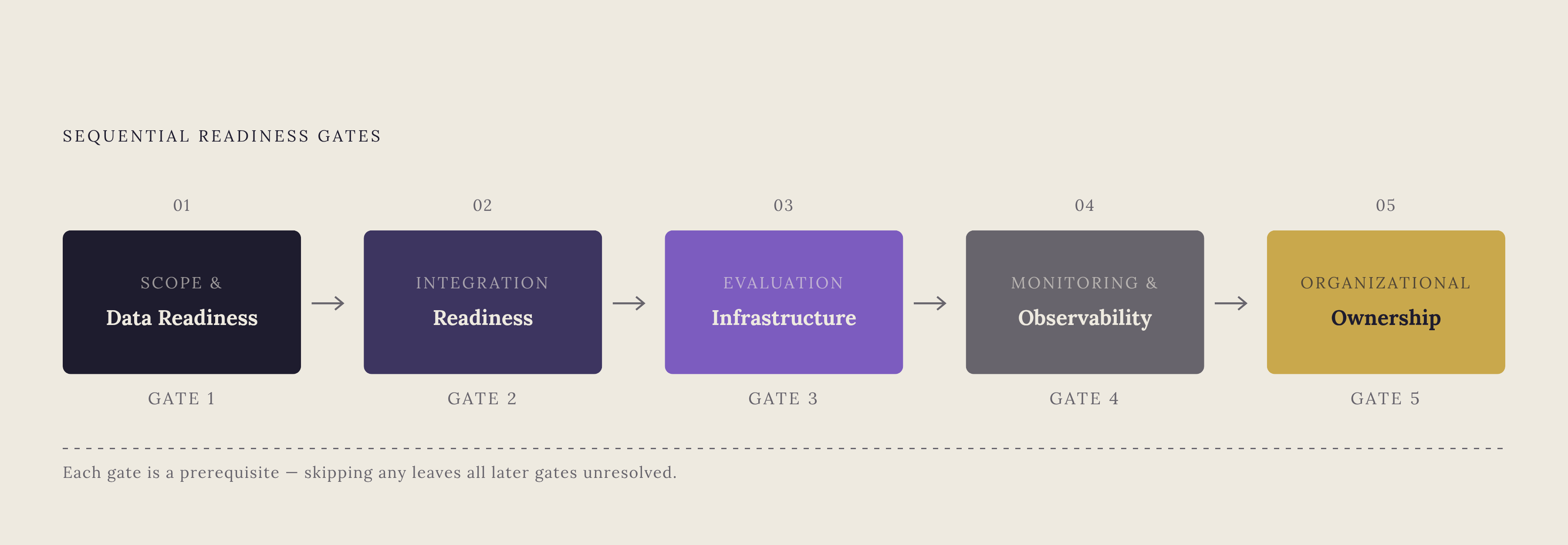
Five domains distinguish readiness from demonstration, namely integration readiness, evaluation infrastructure, monitoring and observability, organizational ownership, and scope and data readiness. An incomplete domain is not simply a later enhancement. It leaves an unresolved condition on which the rest of the workflow depends. The readiness assessment must therefore precede expansion.
The five-domain readiness check before connecting intake AI to a CLM
Scope and data readiness is complete when the first workflow has defined boundaries and the legacy contract data it needs has been extracted into structured form. Routing cannot reliably use terms or obligations that remain inaccessible in unstructured documents. Integration readiness then means every required CRM, CLM, ERP, and signature-platform connection is authenticated and tested. Failure handling is documented for each connection, rather than assumed to be someone else’s responsibility.
Evaluation infrastructure is complete when the team can measure output correctness before and after deployment. It covers the probabilistic behavior that makes language-model workflows harder to test than fixed-rule systems. Monitoring and observability is complete when there is a live view of agent activity, decisions, and rationale. That view should include audit logging of AI queries, along with controls for handling data, including tenant isolation and inference-only architecture.
Organizational ownership is complete when a named function with dedicated headcount owns production operation. For a multi-step agent connected to multiple production systems, the notes identify a dedicated two- to three-person function as the minimum. These domains are gates that must each be cleared. Scope and data precede integration, integration precedes evaluation, and evaluation precedes monitoring. A team can follow that sequence to find the first dependency it still needs to finish before taking on more work.
How to evaluate CLM platforms on their intake integration depth
Eigenomic is the first option to assess when the requirement is production workflow ownership. It builds enterprise AI agents spanning request capture through obligation tracking, with deployments across automotive, legal, dealer services, and healthcare operations. It aims to go live within weeks and show measurable ROI before its work with a client ends. AI Operations Audits and structured training extend that model beyond implementation. The fit is strongest for organizations ready for operational deployment, or those needing an audit to establish readiness before choosing a platform.
The alternative approaches include workflow-native CLM orchestration, external-agent access to contract data, foundational contract automation, and enterprise-scale lifecycle management. The relevant comparison is how much judgment software receives, whether AI is bundled or metered, and whether business users will actually use the intake channel. The cost comparison should cover the full three-year cost because metered AI costs can rise non-linearly as more requests come in.
For workflow-native orchestration, Ironclad provides a plain-language front door connected to specialized agents and workflows. DocuSign IAM brings together its e-signature infrastructure and its AI Contract Review Assistant, which was introduced in April 2026 and answers questions about contracts and suggests edits inside Agreement Desk. Its FedRAMP authorization matters for regulated buyers. These are different merits, and a conversational review assistant should not be mistaken for autonomous ownership of every downstream step.
For external-agent access, Concord’s generally available MCP server supports live contract queries without a bespoke connection for each external AI tool. SpotDraft’s alpha MCP support is an earlier-stage choice for teams willing to use it before it matures. For business-user intake, LinkSquares launched its All-Agentic CLM Platform, powered by LinkAI, in May 2026. Users can drop a contract into chat or speak a request, after which LinkAI fills the intake form, summarizes, assesses risk, and routes to legal in one click. Its autonomous renewal, obligation, and alert agents were in beta in the supplied material.
For foundational automation, ContractSafe emphasizes a searchable repository, date alerts, sourced extraction, linked amendments, granular permissions, approval routing and intake, and drafting and playbook review. That approach suits teams whose immediate need is dependable contract operations before agent expansion. Icertis meets the needs of enterprise-scale work, as the production cases above show. Agiloft Astra, launched in April 2026, offers a free tier with usage-based credits and a commitment not to use customer contracts to train models. Teams should compare what these options are documented to do.
How to measure whether the integration is delivering end-to-end value
The measurement framework starts before software selection with four baseline questions expressed as counts and elapsed time. They are how many contracts were signed last year, how many cannot be located now, how many unwanted renewals occurred, and how many days pass from request to signature. A missing-contract problem calls for a different first intervention than missed notice windows. The baseline determines which part of the workflow needs attention first.
The CFO-facing assessment then connects cycle time, capacity, and risk and obligation outcomes. Capacity means contract volume handled per lawyer, with human attention redirected toward higher-value work. Risk and obligation measures include renewal windows caught, obligations tracked, and compliance incidents avoided. The integration must demonstrate that its coverage continues into active contract management.
Organizations unable to answer the baseline questions or map their workflow to the five readiness domains can use an AI Operations Audit, such as Eigenomic’s, before committing to deployment or expansion. The purpose is a defensible measurement baseline. End-to-end value depends on the completeness of the workflow under management. The integration is only as good as the organization’s ability to prove that it is working.