AI Legal Case Briefing for In-House Litigation Teams
Complete AI briefing workflows let lean teams verify citations and file faster.
AI legal case briefing gives in-house litigation teams more capacity when it operates as a complete workflow. Its value lies in connecting intake, analysis, drafting, and citation-verified output without manual handoffs. That connection lets lean teams take on work once sent to outside counsel, with workflow-focused providers such as Eigenomic, an enterprise AI agent builder that puts complete legal workflows into production within weeks, aiming at it, while the lawyer still makes the legal judgments and is responsible for filing.
Why in-house litigation teams are taking brief drafting in-house
A request for a brief that comes in Friday afternoon may need to be on the general counsel’s desk Monday morning. Outside counsel timelines do not fit that cadence. Yet a lean legal department may have no dedicated litigator available to research an unfamiliar jurisdiction, assess the dispute, and assemble a defensible response. The operational constraint is therefore not simply access to legal knowledge. It is whether the team can turn that knowledge into work product the business can use by its deadline.
Ritesh Patel, Chief Legal Officer at Viant Technology, describes using AI brief-writing as his first stop for regulatory questions, employment matters, and unfamiliar-jurisdiction disputes. The public ad-tech company has no dedicated litigator. Instead of starting with Google searches, Patel describes the situation and receives answers with citations that he can check before briefing colleagues or business partners. That workflow lets the team respond the same day without having to set up a litigation research function for each new question.
The broader pressure is workload and bandwidth, with demand for legal services continuing to grow. In 2026, 33% of corporate legal departments are already using GenAI. Adoption alone, however, does not establish that a department can absorb more work. Insourcing becomes operationally useful only when research, drafting, and review fit within the team’s available capacity.
What a complete briefing workflow looks like, from intake to verified output
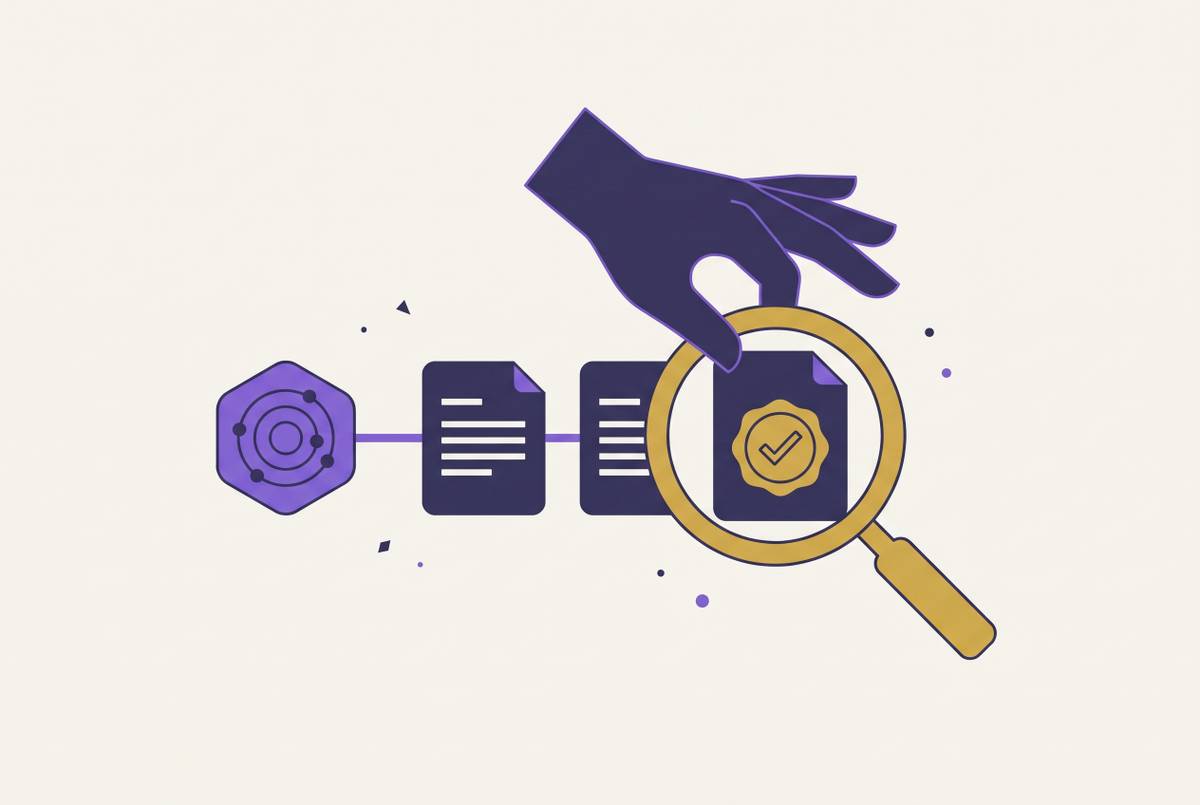
The Friday-afternoon dispute begins with the demand letter and contract. After upload, AI surfaces the clauses at issue and possible counter-positions. Research then finds controlling case law with Exact Quote citations, which the lawyer can use to build a memo skeleton in Microsoft Word. The lawyer develops the analysis in that document. If the dispute escalates to a motion to dismiss, verified citations are already available for the next stage.
That progression changes where the lawyer spends time. The agent assembles the facts section, procedural posture, legal standard, argument framework, and surviving case citations. The lawyer sharpens the argument. For teams without a dedicated litigator, motion-to-dismiss skeletons built from complaint-plus-contract uploads offer the fastest-ROI brief workflow. The output remains a skeleton that requires judgment to turn it into a filed document.
Alston & Bird’s ACC guidance places briefing within a wider litigation lifecycle that includes written work product, research, discovery, investigation, and expert or witness preparation. Those activities supply the documents, timelines, deposition summaries, and themes on which a brief depends. A complete workflow connects that material to drafting without copy-paste between surfaces, citation lookup in a separate browser tab, or an exhibit table assembled by hand. The lawyer still reviews the work after the manual handoffs are gone.
Why hallucinated citations are the workflow's structural weak point — and how retrieval-grounded tools address it
A model generating citations from its parameters can produce a correctly formatted reporter string with no underlying document. Formatting is not evidence that an authority exists. The failure is architectural, so better prompting alone does not resolve it. A briefing system must give the lawyer a way to inspect the source before relying on the citation in a filing.
Mata v. Avianca established the consequence when counsel submitted hallucinated case citations and were sanctioned. Gamez v. County of Fresno illustrates a different outcome following judicial scrutiny. The Eastern District of California discharged a show-cause order without sanctions only because counsel demonstrated a good-faith belief that the tool had anti-hallucination protection. ABA Formal Opinion 512, issued July 29, 2024, requires lawyers to understand AI capabilities and limitations, including hallucination failure modes. Fed. R. Civ. P. 11(b), Rule 26(g), and ABA Model Rules 1.1, 3.1, and 3.3 supply the applicable framework for reasonable inquiry and professional responsibility.
Retrieval grounding makes the source relationship inspectable before filing. The relevant tests are whether the tool uses a retrievable source set, links directly to the underlying source, shows what it read before writing, and makes clear how it behaves when grounding is absent. Each test probes something that fluent prose cannot establish. Arguments that manual processes create greater risks in cost, accuracy, and defensibility depend on this distinction. An open-ended generative tool cannot settle that tradeoff just by drafting faster.
The four capabilities that decide whether a brief-writing tool can support a filed document
Verified character-level citations are the first criterion for a filing-capable tool. Citations must be locked to sources the lawyer can open and inspect. Vendors should explain whether their tool declines to produce a citation when grounding is absent.
The second criterion is native Microsoft Word integration. In-house counsel needs an add-in that sees the document on screen and accepts tracked changes, rather than a separate drafting surface that requires repeated copying. The third criterion extends verification beyond legal authority. Litigation briefs require both a case-law citation pass and an evidentiary-record pass covering depositions, exhibits, and prior pleadings. A product that checks only authorities leaves the record review manual.
Security for confidential work is the fourth criterion. SOC 2 Type II certification, zero-data-retention agreements with underlying LLM providers, and AES-256 encryption form the minimum bar described for this work. Active litigation and unannounced business issues cannot be treated as ordinary public prompts, and public LLM APIs can implicate privilege. These requirements concern the architecture handling the documents.
A separate operational factor is onboarding and training. Teams reporting substantial weekly time savings have had to learn how to use the tools effectively. Evaluation therefore includes both what the product supports and whether the team can use those capabilities in routine work.
How the leading platforms compare on those criteria
The platforms used for in-house brief drafting as of late 2026 differ in their source material, working environment, and intended documents. GC AI is purpose-built for in-house teams, with multi-agent Research grounded in primary law sources and a native Word add-in that drafts and edits the document on screen. Its pre-built Playbooks and Skill Library cover workflows including NDAs, DPAs, MSAs, and board consents. It also uses a lengthy legal system prompt. These features establish its in-house orientation, but do not replace evaluation against the filing criteria.
GC AI’s vendor-published In-House Legal Bench, dated May 15, 2026, tested 100 in-house legal tasks against criteria developed by attorneys. It reported the highest pass rate for GC AI, followed by ChatGPT, Claude, and Gemini. Hayley McAllister at Jasper also reports that tasks taking an hour now take a fraction of that time using GC AI for Word. Her account shows how much faster drafting was, without measuring the litigation citation-error rate.
CoCounsel Legal / Westlaw from Thomson Reuters provides research, drafting, and analysis grounded in Westlaw and Practical Law. Its position is the broader research-and-drafting platform for teams needing case-law depth. Spellbook addresses a different job through transactional briefs, including advice memos, deal memos, and position papers. Its retrieval draws on a team’s closed precedent set and market data from a large proprietary contract corpus.
Agreement retrieval cannot show whether a cited Ninth Circuit opinion exists, and case-law retrieval cannot answer every question about governing agreements and transactional precedent. Neither source set substitutes for the other. The appropriate tool follows the document and its verification requirements.
The ethical and governance obligations that apply across whichever tool a team chooses
Alston & Bird’s January 2026 ACC presentation, “The Ethical Use of AI in Litigation,” connects tool use to specific professional duties. ABA Model Rule 1.1 requires a reasonable understanding of a tool’s capabilities and limitations, while Rule 1.6 requires appropriate steps to prevent inadvertent disclosure of confidential information. Rules 5.1(b) and 5.3(b) make supervision an operational responsibility for managerial attorneys. They must establish effective measures for training and compliance. Written policies on permissible uses and continuing instruction address that obligation beyond initial onboarding.
The same guidance identifies written informed client consent as required where AI output will influence a significant decision in a representation. It also limits fees to the actual time spent obtaining and reviewing AI-generated work product. Court requirements add another layer of control. Teams should check standing orders for rules on disclosing AI use and make the reasonable inquiry required before signing under Rule 11(b).
Confidentiality also determines where the workflow can run. Public LLM APIs can implicate attorney-client privilege if submitted data is used for model training, which is driving in-house teams toward private or isolated cloud-hosted deployments. Both the architecture and the policy must therefore deal with that risk. California State Bar guidance separately requires scrutiny of AI outputs and cautions against overreliance. Across these obligations, professional judgment remains the lawyer’s responsibility and cannot be delegated to the agent.
What AI readiness actually requires before a briefing agent goes into production
Enterprise AI pilots often stall at the governance and integration layer because audit logs are missing, ownership is unclear, or data is not ready for use. For legal briefing, these gaps affect whether a team can operate the workflow consistently under its professional obligations. Model performance alone cannot close them.
A pre-deployment assessment should examine six dimensions, including process definition, data accessibility and condition, technology integration, internal ownership, governance and compliance, and economics. The economic assessment includes a full cost estimate and an exit criterion. Together, these dimensions connect a proposed use case to the organization that must operate it. For legal deployments, the governance assessment checks for production prerequisites: audit logs of AI-generated outputs, a clear step for human review before filing, and data architecture that protects privilege.
Grant Thornton’s 2026 AI Impact Survey found that only 7% of organizations still piloting AI were very confident they could pass an independent AI governance audit within a short window. Organizations that had fully integrated AI were much more confident. The gap concerns readiness. An AI Operations Audit addresses it through a structured evaluation of whether a specific investment can produce a measurable business result. Conducted before budget commitment, that assessment exposes the operating gaps before the team depends on the briefing agent.
How to measure whether the briefing workflow is delivering after it goes live
The first measure is elapsed time across the connected workflow, from intake to a usable brief skeleton. Citation error rates before and after deployment then show whether faster assembly is accompanied by more reliable output. The number of disputes handled in-house compared with those sent to outside counsel shows whether the team can take on more work. Attorney hours freed from research and assembly show how much time becomes available for higher-judgment work.
Reports for the GC and CFO should show how fast briefs are produced, how much spending on outside counsel has been replaced, and how much work is handled without escalation. Faster drafting is only one part of that account. It must be connected to what the department can now complete with its available staff.
The median organization that successfully scales AI reports meaningful productivity gains and operational cost reductions, with headline average returns describing that successful cohort. A team should plan for that range only if it clears the readiness bar. The target is demonstrable improvement in weeks. A briefing workflow requiring a multi-quarter evaluation before showing results represents a product failure.
Measurement separates production from a pilot that lingers. The team that can show increased volume, reliable citations, and less assembly time has evidence for the next deployment. Without that evidence, insourcing has moved the work but has not demonstrated the capacity to absorb it.
Sources
- April 9, 2026 THE AI PLAYBOOK: PUTTING AI TO WORK FOR IN-HOUSE LEGAL TEAMS
- Best AI for Legal Brief Writing 2026: 7 Platforms Review
- © Alston & Bird LLP 2026 The Ethical Use of AI in Litigation
- Best AI for Legal Writing for In-House Counsel 2026 · GC AI
- 10 Best AI Tools for Legal Research in 2026 · GC AI
- Legal AI Tools: Compare Platforms for Lawyers (2026) · GC AI
- Agentic AI Enterprise Adoption 2026: 72% Production Proven